Fire safety is one of those responsibilities that many people don’t think about until something goes wrong. Yet for business owners, landlords, facilities managers, and property managers, complying with UK fire regulations is a legal obligation that cannot be ignored. A fire can develop quickly, often with little warning. In many cases, smoke spreads through a building before flames become visible, making early detection critical. That’s why fire alarm systems remain one of the most important components of any fire safety strategy. However, compliance isn’t simply about installing a few detectors and hoping for the best. UK fire regulations require building owners and responsible persons to assess risks, implement appropriate fire safety measures, maintain equipment, and ensure occupants can evacuate safely in an emergency.
This guide explains what UK fire regulations require, how fire alarm systems fit into compliance, and what businesses and property owners need to know to protect people, property, and their legal position.
Why Fire Regulations Matter
Fire safety legislation exists for one reason: to protect lives.
In commercial premises, the primary legislation governing fire safety is the Regulatory Reform (Fire Safety) Order 2005. This legislation places responsibility on a designated “Responsible Person” to ensure suitable fire precautions are in place. The Responsible Person may be a business owner, employer, landlord, facilities manager, managing agent, or building owner. Regardless of their title, they are responsible for ensuring appropriate fire safety measures are implemented and maintained. Their responsibilities typically include conducting fire risk assessments, providing suitable fire detection and warning systems, maintaining fire safety equipment, ensuring escape routes remain safe and accessible, training staff and occupants, and regularly reviewing fire safety procedures. Failure to comply can result in enforcement action, significant financial penalties, and in serious cases, criminal prosecution.
More importantly, inadequate fire safety arrangements can place employees, customers, tenants, and visitors at unnecessary risk.
Fire Risk Assessments: The Foundation of Compliance
One of the biggest misconceptions surrounding fire safety is that installing a fire alarm system automatically makes a building compliant. In reality, compliance begins with a fire risk assessment. A fire risk assessment identifies potential ignition sources, combustible materials, high-risk areas, occupancy levels, vulnerable individuals, existing fire protection measures, and evacuation procedures. By examining these factors, the assessment helps determine the level of fire protection required within the building. The findings of the assessment determine what level of fire protection is required and whether additional measures such as emergency lighting, fire doors, fire extinguishers, or suppression systems are needed.
At RJ Wilson, one of the most common issues we encounter is businesses that have altered their building layout over time without reviewing their fire alarm coverage. New offices, partition walls, storage areas, and equipment installations can all affect detector performance and evacuation routes. Regular reviews help ensure fire safety arrangements remain suitable as buildings evolve.
Understanding BS 5839 Fire Alarm Categories
Commercial fire alarm systems in the UK are generally designed in accordance with BS 5839, the British Standard for fire detection and fire alarm systems in non-domestic premises.
BS 5839 defines several categories of fire alarm systems depending on the level of protection required.
Category M – Manual Systems
Category M systems rely entirely on occupants discovering a fire and activating manual call points. These systems provide no automatic fire detection and are typically only suitable where occupants are always present and able to raise the alarm quickly.
Category L Systems – Life Protection
Life protection systems are designed to safeguard building occupants.
Category L1
The highest level of life protection. Automatic detectors are installed throughout the building, providing the earliest possible warning. These systems are commonly used in hotels, care homes, and large public buildings where comprehensive coverage is essential.
Category L2
Detection is installed in escape routes and high-risk areas. This category is frequently used in factories, houses in multiple occupation (HMOs), and larger office environments where additional protection is required.
Category L3
Detection focuses on escape routes and rooms opening onto escape routes. This level of protection is often suitable for office buildings and retail premises.
Category L4
Detection is provided only within escape routes.
Category L5
A customised system designed to protect specific risks identified during a fire risk assessment.
Category P Systems – Property Protection
Property protection systems aim to minimise damage and business interruption.
Category P1
Automatic detection is installed throughout the building to provide the highest level of property protection.
Category P2
Detection is installed only in specific high-risk areas where the risk of fire or potential damage is greatest. The correct category should always be determined through a professional fire risk assessment.
Understanding Fire Alarm Types
Different environments require different forms of fire detection.
Smoke Alarms
Smoke detectors identify particles in the air and provide early warning before a fire develops significantly. They are commonly installed in offices, corridors, hallways, bedrooms, and escape routes where early detection is critical. Smoke detection is often the first line of defence against fire.
Heat Alarms
Heat detectors respond to temperature increases rather than smoke. They are commonly installed in kitchens, workshops, boiler rooms, and garages. Because steam, dust, and cooking fumes can trigger smoke detectors, heat alarms are often the better choice in these environments.
Manual Call Points
Manual call points allow occupants to activate the alarm immediately if they discover a fire. Positioned near exits and along escape routes, they remain an essential part of most commercial fire alarm systems.
Multi-Sensor Detectors
Many modern systems now use multi-sensor technology, combining smoke and heat detection to improve reliability and reduce false alarms.
Fire Alarm Placement: Why Design Matters
Even the best fire alarm equipment can be ineffective if it is installed incorrectly. Detector placement must take into account factors such as the building layout, ceiling height, airflow patterns, occupancy levels, escape routes, and environmental conditions. Each of these elements can influence how effectively a detector identifies smoke or heat during an emergency. Common installation mistakes include placing detectors too close to air vents, creating gaps in detector coverage, using smoke detectors where heat detectors would be more appropriate, and failing to update systems following building alterations.
Professional design ensures the system provides effective coverage throughout the property.
Fire Alarm Requirements by Building Type
Different buildings face different fire risks.
Offices
Office environments typically require detection along escape routes, circulation spaces, and higher-risk rooms such as kitchens, plant rooms, or server rooms.
Warehouses
Warehouses often require larger-scale detection systems, high-level detectors, and integration with smoke control or suppression systems due to their size and storage arrangements.
Retail Premises
Retail premises require coverage of customer areas, stockrooms, staff facilities, and escape routes to ensure both occupants and assets are protected.
Schools and Educational Buildings
Educational buildings need systems capable of protecting large numbers of occupants across multiple classrooms, corridors, and zones.
Residential Blocks and HMOs
Residential blocks and HMOs may require interconnected systems, communal area detection, emergency lighting, and enhanced evacuation measures depending on the building’s design and occupancy.
There is no one-size-fits-all approach to fire safety.
Fire Alarm Testing and Maintenance
Installing a fire alarm system is only the beginning.
To remain compliant, systems must be inspected and maintained regularly.
Routine Testing
Regular testing helps ensure that sounders operate correctly, call points function properly, control panels remain fault-free, and occupants recognise alarm signals when activated. Weekly user testing is commonly recommended in commercial environments to identify issues before they become serious.
Professional Servicing
Qualified fire alarm engineers should carry out scheduled inspections throughout the year. During maintenance visits, engineers will typically test detectors, check batteries and power supplies, inspect cabling, verify communication between system components, review control panel functions, and update maintenance records. Professional servicing not only supports compliance but also helps identify faults before they become critical.
Common Compliance Mistakes
Many fire safety failures result from relatively simple oversights.
Ignoring Fault Indicators
A fault light on the control panel should never be dismissed. Even minor faults can affect system performance.
Failing to Update Systems
When buildings change, fire alarm systems should be reviewed to ensure coverage remains suitable.
Poor Record Keeping
Businesses should maintain accurate records of fire risk assessments, alarm testing, maintenance visits, fire drills, and staff training. This documentation is often requested during inspections and investigations and can provide important evidence of compliance.
Delaying Upgrades
Older systems may no longer provide the level of protection expected under modern standards. Regular reviews help ensure systems remain effective and compliant.
What Happens if You Don’t Comply?
The consequences of non-compliance can be significant. Depending on the severity of the issue, fire authorities may issue alterations notices, enforcement notices, prohibition notices, or initiate prosecution proceedings. In some cases, businesses may be prevented from operating until serious deficiencies are addressed. Beyond regulatory action, inadequate fire safety can increase insurance risks, damage a company’s reputation, lead to civil claims, and result in substantial business disruption. Compliance should therefore be viewed as an investment in safety rather than a regulatory burden.
Staff Training and Fire Safety Awareness
Even the most advanced fire alarm system can only do so much. People must know how to respond when an alarm sounds.
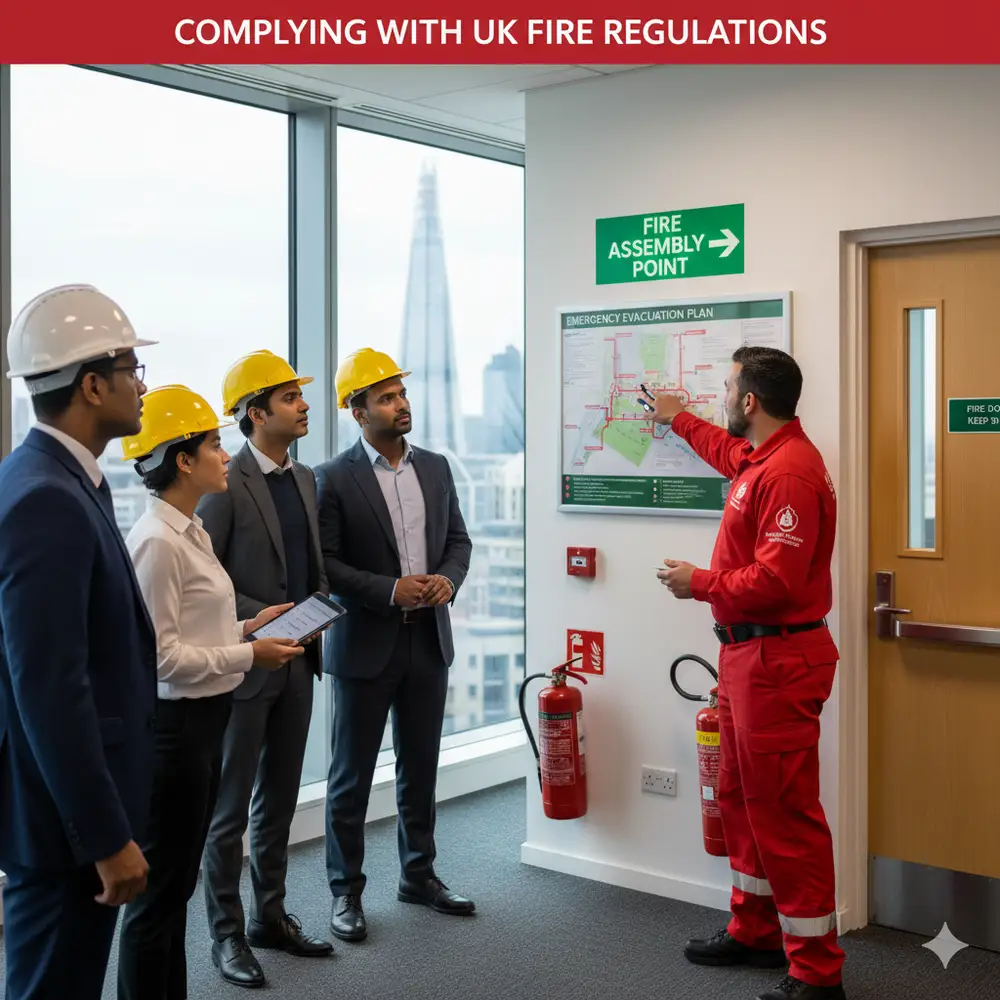
Regular training should cover evacuation procedures, assembly points, fire warden responsibilities, emergency contacts, and reporting procedures. Fire drills help reinforce these processes and identify weaknesses before a real emergency occurs.
Why Professional Fire Safety Advice Matters
Fire safety requirements vary significantly between buildings. What works for a small office may be completely unsuitable for a warehouse, manufacturing facility, residential block, or healthcare environment. Professional fire safety specialists can help ensure compliance with current legislation, correct system design, appropriate detector placement, reliable maintenance, and ongoing support as regulations evolve. Most importantly, they help create safer environments for everyone who uses the building.
Frequently Asked Questions
Who is responsible for fire safety in a commercial building?
The Responsible Person, typically the employer, landlord, building owner, or facilities manager, is responsible for ensuring suitable fire safety measures are in place.
How often should commercial fire alarms be serviced?
The exact schedule depends on the building and system installed, but regular professional servicing is essential to maintain compliance and reliability.
Can I install a commercial fire alarm myself?
Commercial fire alarm systems should generally be designed and installed by qualified professionals to ensure they meet legal requirements and relevant standards.
Are fire risk assessments a legal requirement?
Yes. Most commercial premises are legally required to have a suitable and sufficient fire risk assessment.
What category of fire alarm system does my building need?
The appropriate category depends on your building’s layout, occupancy, and risk profile. A fire risk assessment will determine the most suitable level of protection.
Why Choose RJ Wilson?
At RJ Wilson, fire safety isn’t simply about meeting regulations. It’s about protecting people, property, and business continuity. Our experienced engineers design, install, maintain, and upgrade fire alarm systems across a wide range of commercial, industrial, and residential environments. We understand the practical challenges businesses face and provide straightforward advice based on real-world experience, not generic recommendations. From fire risk assessments and system design through to ongoing maintenance and compliance support, we help our clients create safer buildings and meet their legal obligations with confidence.
Speak to Our Fire Safety Specialists
Whether you’re responsible for a small office, a large warehouse, a residential block, or a multi-site business, ensuring compliance with UK fire regulations starts with understanding your risks and implementing the right solutions. Contact RJ Wilson today to discuss your fire alarm requirements, arrange a site survey, or learn more about how we can help keep your building compliant, protected, and prepared for the unexpected.